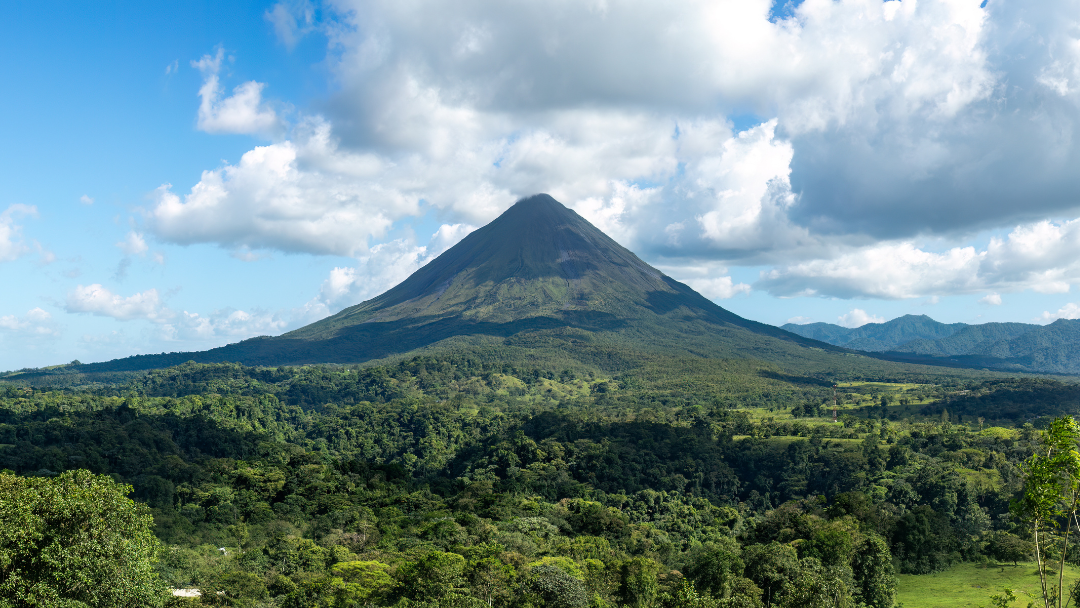
Costa Rica is known for its beaches, wildlife, and lush green hillsides. But the forested landscapes you see today are not accidental.
They are the result of one of the most successful conservation turnarounds in modern history.
In the 1980s, Costa Rica had one of the highest deforestation rates in the world. Forest cover had dropped dramatically due to logging and agricultural expansion. Many feared the country’s biodiversity would be permanently damaged.
Instead, Costa Rica chose a different path.
Paying to Protect Nature
Rather than treating forests as disposable land, Costa Rica introduced a groundbreaking policy known as “Payments for Ecosystem Services.”
Under this program, landowners are financially compensated for preserving forest on their property. The government recognized something revolutionary at the time:
Forests are not just scenery.
They provide measurable economic value.
They:
- Capture carbon
- Protect watersheds
- Prevent erosion
- Support biodiversity
- Strengthen climate resilience
By placing economic value on environmental preservation, Costa Rica reversed decades of damage.
Today, more than half of the country is once again covered in forest.
What That Means for Travelers
When you visit Costa Rica, you are stepping into a living conservation success story.
The howler monkeys at sunrise.
The scarlet macaws overhead.
The jungle canopy stretching toward the Pacific.
These experiences exist because the country made deliberate long-term decisions to protect its natural capital.
In areas like Playa Ocotal, where Mar-a-Selva sits above the coastline, conservation and thoughtful development exist side by side.
You’re not looking at accidental beauty.
You’re looking at policy in action.
Luxury That Respects the Landscape
At Mar-a-Selva, the experience is designed to immerse guests in this protected environment — without disrupting it.
From the infinity pool terrace, you look out across forest canopy to the Pacific. Wildlife moves freely through preserved areas. Fresh ingredients sourced locally are prepared by your private chef, reducing the need for excess transport and waste.
Costa Rica proves that luxury and sustainability are not opposites. They are compatible — when done intentionally.
A Country That Chose Long-Term Thinking
Costa Rica has also invested heavily in renewable energy and protected land. Over a quarter of its territory is under environmental protection, and nearly all of its electricity comes from renewable sources.
This isn’t marketing language.
It’s national strategy.
For travelers, that means:
- Cleaner air
- Thriving ecosystems
- Preserved wildlife corridors
- A travel experience rooted in environmental integrity
Travel That Supports Something Bigger
When you choose Costa Rica, you support a country that prioritized preservation over short-term exploitation.
And when you stay at Mar-a-Selva, you experience that commitment firsthand — from jungle-framed sunsets to evenings filled with ocean breeze and birdsong.
The forest canopy outside your terrace is not just beautiful.
It’s protected.
Learn More
A recent feature in Vox explores Costa Rica’s innovative forest conservation model and how the country rebuilt its forest cover through Payments for Ecosystem Services.
You can read the full article here:
https://www.vox.com/climate/479573/costa-rica-forest-ecosystem-services
The post How Costa Rica Became a Global Leader in Forest Conservation — And What It Means for Your Stay appeared first on Mar-a-Selva.